A true Yooper: the chickadee
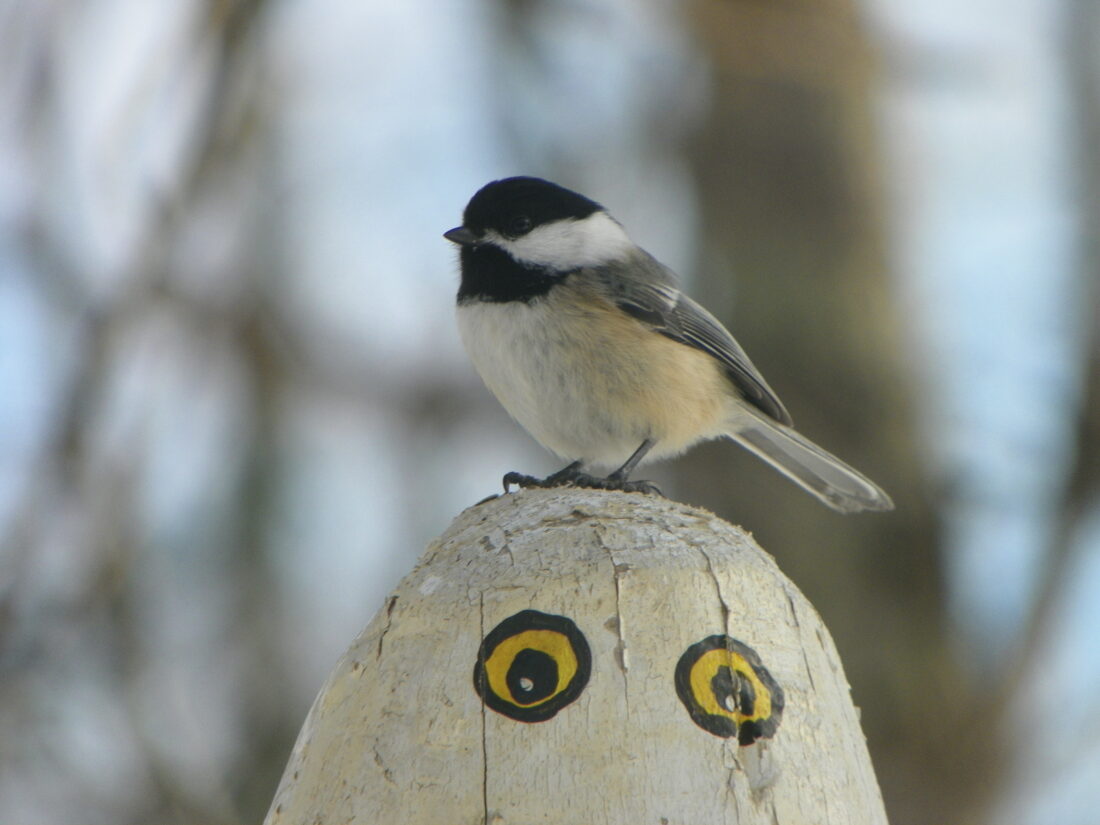
Karen Wils photo A black capped chickadee friend lands on top of a totem pole.
ESCANABA — A sooty black Stormy Kromer tops his head.
A downy vest of gray wraps his slightly round tummy with warmth. Underneath he wears off-white long johns to keep him comfy on cold winter nights.
He is a perfect Yooper.
The robin is Michigan’s state bird, but the cute little chickadee is almost everyone’s favorite bird.
The cheerful chickadee is always the first one at our bird feeders. His puffy, little chick like body and oversized head make him look like a cartoon bird wearing a black bib.
Very well adapted to life in the north woods, the black capped chickadee is a year round resident in Michigan not a fickle friend like the robin.
Chickadees, like most U.P. folks prefer to live in mixed hardwood and coniferous forests. They are friendly sociable birds. They chirp a greeting at us as we pass by. If you stand still long enough with an open hand of sunflower seeds, a chickadee will surly land on your fingertips and invite himself to supper.
In the summer this bird eats a lot of insect eggs, ants, aphids and millipedes. In the winter they eat conifer seeds and larva. In the winter months nothing is as peaceful as watching dozens of chickadees float in the frigid air back and forth between the bird feeder and the trees.
Chickadees eat some seeds and stash some seeds in the crevices in the bark on trees. Researchers have written that a chickadee can find stashed seeds even after eight months. Amazing. I can’t find food in the refrigerator that I put there yesterday.
When you see the tiny little legs and feet on a chickadee, one wonders how it can survive below zero weather.
I have read that this bird can lower its body temperature at night. In a state of controlled hypothermia, it conserves energy and can sleep through the night.
Chickadees, like most true Yoopers, love family. They live in flocks. They call to one another from the tree branches and they travel together.
The song of content chickadees is music to deer hunters. It means all is well. Campers, snowshoers and cross-country skiers stop often just to enjoy this bird’s happy chatter.
Male and female chickadees look alike. In the springtime they needed older trees to make a nesting cavity in.
Like the people of the U.P., the chickadee is hardy. Several feet of snow and below zero weather does not dampen this bird’s spirits. He is happy go lucky.
To keep him and all of his feathered friends happier in January, put out a little bird feeder. You will probably be surprised at the variety of birds that may stop by.
But without doubt the chickadees will outnumber them all.
Hello friend.
——
Karen (Rose) Wils is a lifelong north Escanaba resident. Her folksy columns appear weekly in Lifestyles.