
The ghost outside the window
Trending
ESCANABA -- Through the early morning mist, I can barely make out the giant ghost.
Looking eastward out my bedroom window, I see a large cement structure on a jack pine-studded hill.
An eerie sound fills the stagnant air.
Like grinding metal against metal, the ancient moan reverberates.
To the east, Little Bay de Noc slowly awakes. Gulls squawk as the fog starts to lift. The big, wooden ore dock comes into view.
To the west, the street car trolley and traffic begins to move on Hartnett Avenue. (Now Sheridan Road)
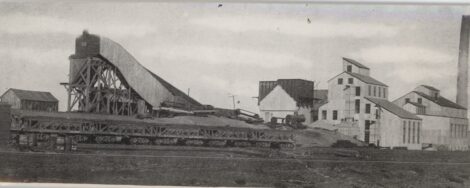
I gaze out my window and squint. I see the tall roofs of several large gray buildings. A circular stack stands like a phantom belching out steam and smoke. It is the tallest landmark on the horizon.
Sweeping out of the sandy hill is a huge, cone-shaped bin. Train tracks glisten in the early morning light.
Spirits rise.
I hear their gruff, male voices. It's not yet day, and the nighttime has nearly slipped away. Outside my window I can see dark figures clad in work overalls, chore coats, suspenders and ethnic hats.
They are oblivious to the steady roar of powerful machinery crushing chunks of raw ore weighing as much as a half a ton.
They are content knowing that at the end of the week they will be paid for their hard labor by the Oliver Mining Company. Their families will thrive in the bustling north side of Escanaba.
I pull my curtains back and blink my eyes. The vision is gone. The ghosts are back in the ground.
Not far from my backyard, a crude piece of moss covered foundation sticks out of the ground. It is all that is left of the massive Oliver Mining Company's ore crushing plant.
This ore crushing facility once covered well over two city blocks. Its 100-foot brick smoke stack was for many years one of the tallest chimneys along the city skyline.
From 1904 to 1926, the ore crusher reigned as the king of the sandy hills of the north shore. Raw ore was shipped into Escanaba by rail. The ore crusher could grind large chucks into smaller more uniform size gravel which was easier to load on the boats.
The ore crusher crushed between 75 to 100 railroad cars of ore per day. The plant employed 20 men.
By 1926, improved crushing equipment at the mines and bigger sturdier ore boats resulted in the closing down of north Escanaba's gigantic ore crusher. The plant was abandoned. For decades the ruins of this once prosperous business rusted and eroded away alongside the train tracks by the Bay Shore.
All of the kids of Northtown played around the round and rectangular buttresses of concrete that once belong to the ore crusher. It was a perfect place for a picnic or a place to play hide and seek. Old sheets of corrugated metal from the ruins were used as sleds in the winter time to slide down "ore crusher hill."
The ghost of the ore crusher is now almost completely buried in the sand. Very near it now stands the rusting dumper, reclaimer and conveyor belts of the pelletized ore era. Iron Port Escanaba is no more.
But out on the Bay, a loon sings us into a new day.
------
Karen (Rose) Wils is a lifelong north Escanaba resident. Her folksy columns appear weekly in Lifestyles.