
Remember when? for Wednesday, Aug. 26, 2026
Trending
The following piece was published in the Daily Press on Aug. 27, 1993
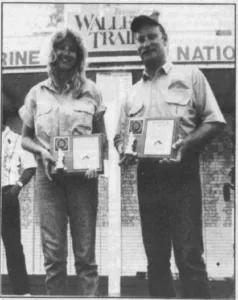
ESCANABA -- Glenn and Carol Chenier have put that Florida vacation on hold for a while.
There’s still plenty of fishing to do.
The Cheniers are in their second full season of competition on the Masters Walleye Circuit, and in that short time hace become one of the top professional husband-and-wife fishing teams in the sport.
They will be among 169 teams expected for the MWC Lindy/Little Joe Team Tournament Saturday and Sunday on Little Bay de Noc.
Fishing will run from 7 a.m. to 4:30 p.m. Saturday and 7 a.m. to 3 p.m. Sunday. Weigh-in will follow the fishing at Gladstone Yacht Harbor.
According to the Cheniers, who are currently 45th in the MWC taeam standing after four of six events, fishing as a married couple has some drawbacks, but benefits outweigh the costs, especially on the water.
“Things can get quite tense in the boat,” Glenn said Wednesday. “If something happens or a big fish gets away, we can argue it out, yell at each other and call each other names. You get it over with and get back to fishing. When you are fishing with a stranger, you can’t do that and it builds up inside.”
In addition, being married helps in making friends with other teams that work the circuit.
The Cheniers, from Escanaba, have developed close relationships with several other teams, particularly 1992 Team-of-the-Year and 1993 season points leaders Gary Gray and Bill Klotzbuecher of Oshkosh, Wis., and Kim Papineau and Jeff Stromberg of Escanaba.
Not only do close relationships between teams build friendships, it also helps performance on the water as teams work together to scout tournament waters and discuss what strategies and baits are working and which ones are not.
The biggest difficulty about fishing on the professional circuit, especially for a husband and wife team, is the financing. It takes a major investment to compete, including cost of a boat, which only lasts two or three years, tackle replacement and bait, transportation, food and lodging, and, of course, fishing licenses for each state where they compete.