
Tribal elder looks at history, cultural impact on Native Americans
Trending
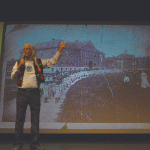
ESCANABA -- Bay College kicked off a three-part speaking series featuring Potawatomi elder Earl Meshigaud Wednesday evening. In the first installment of this series, Meshigaud spoke about the history -- and lasting cultural effects -- of Native American boarding schools.
Meshigaud began his presentation by asking audience members to imagine a traditional Native American feast.
"I want to set the stage for you tonight -- I want to talk about something that you hardly ever hear about," he said.
According to Meshigaud, the culture this exemplified was threatened by the Indian Removal Act, which President Andrew Jackson signed on May 28, 1830.
"As part of that forced removal act, a lot of our people were moved west of the Mississippi River," he said. A series of forced relocations that took place under this act became known as the "Trail of Tears."
In 1838, hundreds of members of the Potawatomi nation were forcibly taken to reservation lands in what is known as the "Potawatomi Trail of Death."
"Very few people know the other part of that story -- that's our story," Meshigaud said.
Later, Meshigaud said many Native American students were forced to attend boarding schools. These schools were established in the late 19th century.
"They continued to be in operation right up until 1936," he said.
The boarding schools had the goal of assimilating students into mainstream American culture, abandoning their own culture in the process.
"Today, we call that 'cultural genocide,'" Meshigaud said.
At these boarding schools, Meshigaud also said students endured widespread physical and sexual abuse.
"How many of these little kids were in those places -- that were abused -- came home with that idea that it was okay?" he asked.
Meshigaud used personal anecdotes during his presentation to illustrate the lingering effects of the boarding schools on Native American societies.
"I was not even in the boarding school, but I became a victim of the behaviors that happened in the boarding school because it was passed down through the generations," he said.
Among these anecdotes was a story about Meshigaud's grandmother, who he did not believe had gone to a boarding school since she was the only person living in Hannahville he knew of who only spoke her native language. However, he later saw her name on a list of boarding school students included in the documentary "Our Fires Still Burn."
"I remember my grandma had one eye missing, and I often wonder if my grandma didn't lose that in the boarding school -- and I also often wonder if my grandma made a commitment when she came home from the boarding school never to speak that language (English) again," he said.
Meshigaud went on to say that the impact of Native American boarding schools can still be felt in the present day.
"We have today a humongous problem -- some of those behaviors that I talked about are buried inside of a lot of our people yet, and a lot of people don't know how to really work through that process," he said.
He said one thing people affected by the legacy of the boarding schools can do to cope with this is to share their stories -- a process which can be difficult, but worthwhile.
"We still have a long way to go, and we can do that by working together," Meshigaud said.
Meshigaud's speaking series will continue with presentations scheduled for Feb. 27 and March 20, which are set to begin at 6 p.m. in the Besse Center Theater. Both upcoming presentations will be streamed at Bay's Iron Mountain campus at 5 p.m. CT. For more information on events at Bay, visit www.baycollege.edu/events.