
School millage: I’ll be back?
Trending
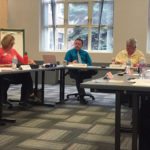
ESCANABA -- The Escanaba School Board discussed placing the sinking fund millage proposal on the November ballot in more detail during a Committee of the Whole meeting Monday.
The millage was defeated by 396 votes during last Tuesday's election with 912 voters saying "yes" to the proposal and 1,308 voters casting ballots against it. Voter turnout for the election was 15 percent.
A school sinking fund is supported by a millage on all real property and is considered as a "pay as you go" method for paying for infrastructure and building maintenance projects. The proposed 2.2 mills ($2.20 per $1,000 taxable value) would've allowed the district to collect approximately $1,209,339 in the first year.
School Board President Dan Flynn began the discussion by having each board member state their opinions on whether or not they were in support of having the millage back on the ballot in November. Members agreed it needs to be revisited.
"I've told somebody before I'm all for the public speaks volume and that's it," said Secretary Bob Chaillier. "But with 15 percent turnout, we're still left with a feeling of wonder if we ran this again in November is it something that we could get out to people."
Chaillier noted the board could have made the election easier to take in by providing more information to the public and using more promotional tools. Vice-President Kathy Jensen agreed, noting the technical term for the funding is sometimes hard for people to grasp as it gives off a negative connotation.
"We definitely need these funds," said Jensen. "I think the name of it is a very difficult to overcome because people don't know what they're voting for and so they don't vote."
Jensen said the board needed more public outreach, including talking to the older generations and community clubs about why the school needs the sinking funds to repair and upgrade the school buildings. Trustee April Chaillier seconded Jensen's opinions.
Treasurer Robert LaFave said while he was frustrated with the results of the election, he thinks they were too aggressive in the amount of mills proposed. The timeline that it was presented to the public was also too short, he added. LaFave suggested if the board decides to bring the millage back to the voters, the millage rate should be reduced.
Trustee Cathy Wilson seconded LaFave's notion, agreeing the millage rate should be lowered and made more appealing to voters with additional information about the sinking fund.
Wilson said revisiting the millage is important as the district needs the funds to make the necessary updates to building infrastructure and implementing better security measures in the district without having to make cuts in order to balance the general fund budget.
Flynn noted he believes the district did as much as it could to inform potential voters about the millage by having public meetings, aside from school board meetings, about the topic. He added he thinks the public and school board meetings could've been "louder" and had better communication about what the district was asking of the voters.
"We know as a board that this is an important investment," said Flynn.
In other business, the board discussed its upcoming general budget for the 2018-19 school year, which faces a shortfall of $1,023, 797.
A motion to approve cuts to the budget will be made at a future board meeting.
At a special meeting last Wednesday, Director of Business Services Kevin Pascoe, outlined a list of possible cuts that could be made in order to balance the deficit.
However, the budget calculation does not take into consideration an over $230 per pupil increase in Gov. Rick Synder's proposal, which is currently under discussion in the House and Senate, or possible increases in funding for Early/Middle College enrollments, explained Superintendent Coby Fletcher Monday, adding the increase in pupil funding discussions are leaning towards the positive.
The early college program was added to Escanaba a month ago and could possibly draw students in from Escanaba, Gladstone, and Rapid River. Gladstone and Rapid River no longer have the program due to multiple audit findings that were found causing the Michigan Department of Education (MDE) to discontinue early middle college at the schools.
The district is estimating a decrease of about 60 students for the upcoming school year, which totals a loss of approximately $460,000. Utilities are also expected to increase by $17,000, impacting the school's expenditures, in addition to increases in property insurance by $3,700, along with $10,000 in salary changes, and $2,400 in other miscellaneous costs.
Fletcher said one of the cuts proposed was reducing the maintenance staff by one. Fletcher noted he and Pascoe can revisit this position and see if there is anything they can do to keep the maintenance worker, but also balancing the budget.
Escanaba's budget must be approved by June 30.
The next school board meeting will take place on Monday, May 21 at 6 p.m.