
City explores bonding for street project
Trending
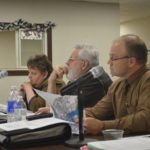
GLADSTONE -- The Gladstone City Commission and Downtown Development Authority met with financial advisors and the city manager of Manistique Wednesday during a special workshop to discuss bonding for a major street, water, and sewer project.
The planned project was spurred by the DDA looking to address flooding due to inadequate storm sewers and other issues in alleyways within the DDA district. While the alleys were a frequent complaint from business and homeowners, the DDA did not have enough money in its budget to address the problems directly, so the authority began looking into bonding for the project.
It was determined the DDA needed to expand the project for it to be eligible for bonding. Between the work of the DDA and a citizen appointed board, the project grew to encompass the majority of 9th Street as well as portions of 7th Street, 11th Street, and Superior Avenue. Despite the additional roadway and alleys, commissioners and the DDA have dubbed the proposal "The 9th Street Bonding Project."
Based on preliminary estimates by Coleman Engineering, the project is expected to cost around $3.6 million -- not including an additional $596,000 to be paid by the city electric fund for electrical lines -- and would include total reconstruction of the street, some water work, sewer work, and stormwater drainage.
During Wednesday's workshop, the city commission and DDA heard what the city could expect if the two entities bonded for the project from representatives from Robert W. Baird & Co., a wealth management and bond servicing firm that Gladstone City Manager Darcy Long had worked with on similar projects while he was the city manager of Amery, Wis.
Based on how the city manages its debts, assets, and its current policies, Warren Creamer, a financial advisor for Baird working in the state of Michigan, believes the city would, in its current state, receive an A plus credit rating from Standard and Poor, but codifying some of the city's policies could improve that rating to a AA minus.
"You improve the rating, the rate goes down," said Creamer.
Even if the city is not successful in increasing its credit rating, accessing the market should not be a problem for the city with an A plus rating. Under the two scenarios brought before the commission and DDA, the city and DDA would pay 2.79 percent on the cost of the bond over 10 years or 3.13 percent over 15 years.
The interest rate could also be improved if the city purchased bond insurance, which essentially offers the city's bonds under the umbrella of another entity's credit rating, but purchasing bond insurance can be expensive.
"If you're not going to get a lower interest rate by buying the bond instance, we're not going to buy the bond insurance," said Justin Fischer, who is also a financial advisor from Baird but works primarily in Wisconsin.
The city could also reduce its overall costs by selling bonds directly to banks. Unlike individuals and companies who are prevented by the Dodd-Frank Wallstreet Reform and Consumer Protection Act from buying bonds issued without an official statement, banks can buy bonds without these documents, which are similar to a stock prospectus. Foregoing the statements can be a financial savings to the city.
If the bonds are issued as a qualified tax exempt obligation, banks can benefit by getting the tax exempt interest off bonds and have the ability to deduct costs related to carrying the bonds. That means some financial institutions will pay more for the bonds upfront to save costs overtime.
Manistique City Manager Sheila Aldrich attended the meeting to discuss how the Manistique DDA has bonded for projects in the past. The Manistique DDA's two most recent bond projects were the $4 million marina and the $3.2 million campground projects. Both bonds were directly placed with U.P.-based financial institutions.
"One of your local banks has a million dollars of one of our bonds," said Aldrich.
Aldrich also noted it may be possible for Gladstone to further stretch its dollar by applying for Rural Development money for the projects. In the past, Manistique has received 75 percent of requests for street, water, and sewer projects, with the remaining 25 percent paid for by bonds.
However, getting money from Rural Development for projects can be a time-consuming process with hoops to jump through. Sometimes cities need to prove they are disadvantaged communities, and frequently cities are required to increase their utility rates.
Whether the city and DDA chose to bond for the full $4 million recommended or a lesser amount, the process is the same. The city must first adopt a notice of intent resolution to start the bond process, which could take up to three months. During that time residents may challenge the bond by placing the item on the next election ballot, which could end the process entirely.
Having a referendum on a bond is relatively rare, and in Gladstone would require 10 percent of the electorate signing a petition to place the bond on the ballot. If the bond is defeated, the process stops and the city and DDA must go back to the drawing board. If the bond is upheld or if the bond never makes it to the ballot, the city can continue with its intent to bond.
The city expects to make a decision on whether or not to proceed with a bond for the project at the regular city commission meeting Monday at 7 p.m. A DDA meeting is also scheduled Monday at 8 a.m. in the city commission chambers, and discussing financing the project is on the DDA agenda.