‘Highly variable’ winter predicted for UP
-
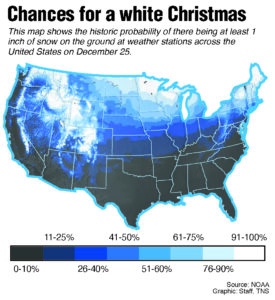
- Map of what to expect in snow cover this Christmas.
-
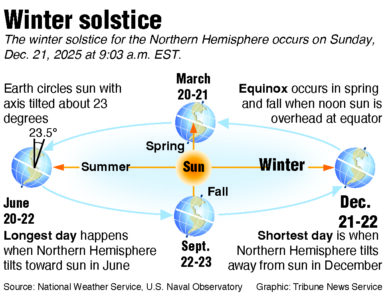
- Infographic on the Winter solstice.
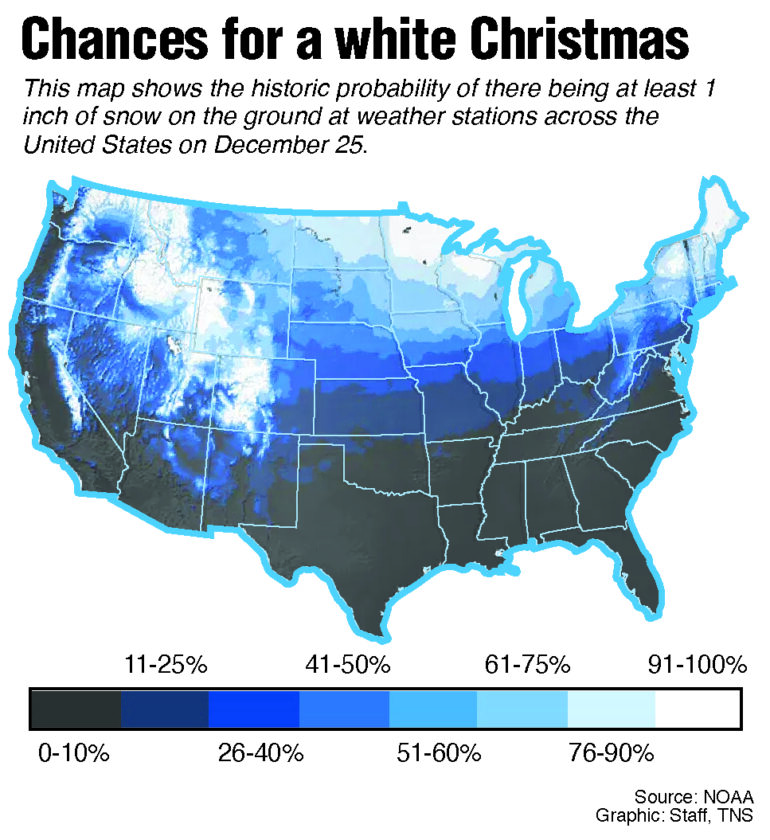
Map of what to expect in snow cover this Christmas.
IRON MOUNTAIN — Forecasters expect plenty of temperature swings in the months ahead, with the odds slightly favoring a colder and snowier winter than normal in the Upper Peninsula.
“Temperatures are expected to be highly variable along and north of the 40th parallel this winter, which is typical during La Nina,” said National Weather Service forecaster Brad Pugh. With those variations, above-average precipitation might also occur in the Great Lakes region, Pugh said.
La Nina is a climate pattern characterized by cooler-than-normal ocean surface temperatures in the central and eastern equatorial Pacific Ocean. La Nina sometimes brings cooler and wetter winters to the northern Midwest — or above the 40th parallel that extends through central Illinois.
The Climate Prediction Center sees a 38% chance of below-normal temperatures in the U.P. and northern Wisconsin from December through February and a 28% chance of above normal. The same odds have been mapped favoring above-average precipitation.
AccuWeather, meanwhile, predicts winter temperatures in the region running a degree or two below average, with precipitation 125% or more above normal.
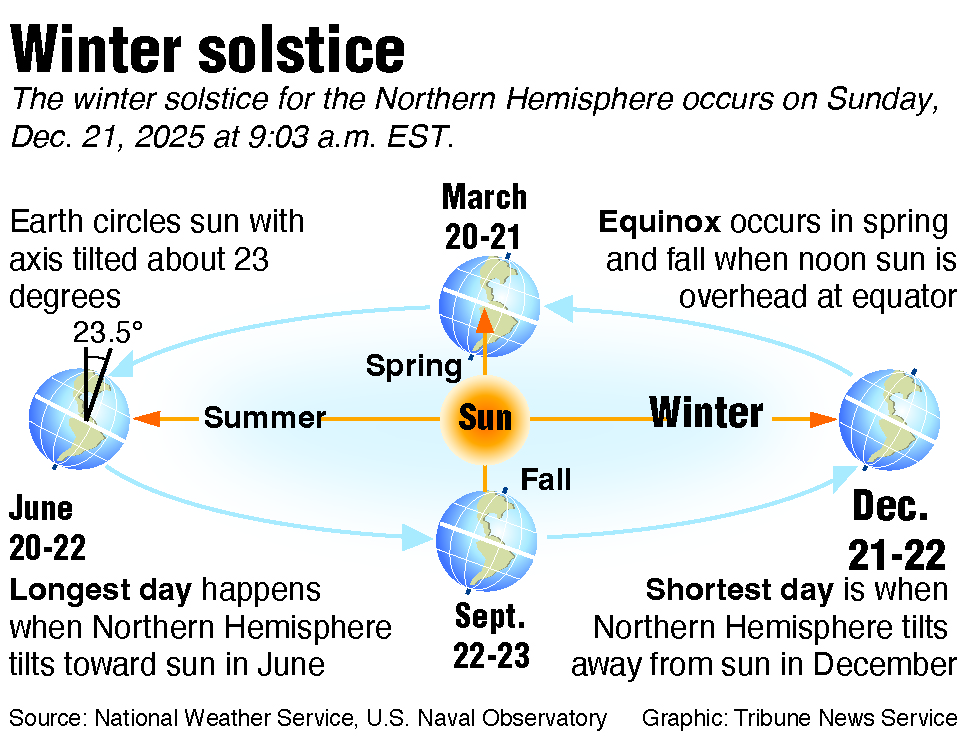
Infographic on the Winter solstice.
The U.S. Drought Monitor shows severe drought in much of Marinette County, Wis., and moderate drought to the north in Florence County. Conditions are abnormally dry along the U.P. border in the southern half of Iron and Dickinson counties.
Elsewhere in the U.P. there’s moderate drought in Menominee and Delta counties, while the rest of the region is largely drought-free.
Winter officially arrives at 9:03 a.m. Sunday, Dec. 21. This marks the shortest day and longest night of the year when the Earth’s axial tilt is farthest from the sun.
La Nina is expected to continue into winter, with a transition to neutral most likely in early 2026, according to the Climate Prediction Center.
December temperatures this century at Iron Mountain-Kingsford have averaged 21.2 degrees.
January — the coldest month — averages 15.5 degrees while February rises to 16.9 degrees.
———
Jim Anderson can be reached at 906-774-3500, ext. 85226, or janderson@ironmountaindailynews.com.
Local News
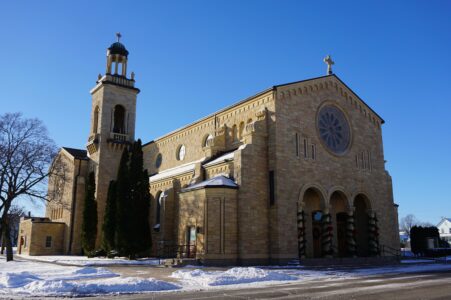
Roots of St. Joseph & St. Patrick Parish date back to 1865

Menominee man wanted on multiple felony charges
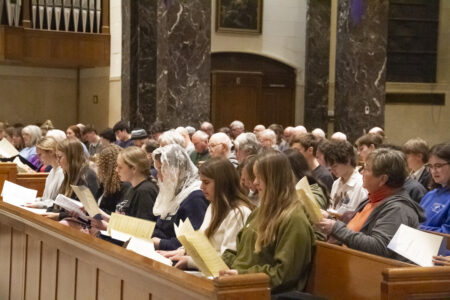
Community Christmas Concert to bring together six choirs
‘Highly variable’ winter predicted for UP
US House candidate Barr details ‘Affordable LIFE’ platform